Are you over thirty and still thinking about getting braces? You may be wondering if it's too late to get a more symmetrical smile, or if adult braces take longer and achieve less results than braces in adolescence.
The truth is that orthodontics It remains an effective treatment option in many cases. Teeth can move in response to orthodontic forces even after growth is complete, but the success of the treatment depends on other factors, the most important of which are the health of the gums and the bone surrounding the teeth, the nature of the bite problem, and the degree of adherence to the treatment plan.
In this article, we explain how effective orthodontics is for adults, the effect of age on results and duration, the best orthodontic options available for adults, and what you should know before starting treatment.
Is it possible to get orthodontic treatment after the age of thirty?
Yes, orthodontic treatment can be done after the age of thirty, and even in the forties, fifties and beyond.As long as the condition of the teeth, gums and supporting bone allows for treatment.
The movement of teeth does not stop when the jaw is fully grown, as the tissues surrounding the roots of the teeth respond to the studied orthodontic forces through a biological process in which the bone is gradually reshaped, allowing the teeth to move towards their new positions.
And she explains American Association of Orthodontists (AAO) Age alone is rarely the deciding factor in whether orthodontics can be performed, and adults can benefit from treatment when the appropriate plan is chosen for their condition.
However, there is an important difference between orthodontics for adults and adolescents; when the jawbones have fully grown, some problems with the structural relationship between the jaws become more complex and may require different treatment options than those used during the growth stages.
Therefore, the most important question not«Am I past the appropriate age for braces?» Rather, «Do my teeth and gums allow for braces, and what is the most suitable plan for me?».
Does age affect the results of orthodontic treatment for adults?
Aging may affect some biological and anatomical aspects related to treatment, but it does not necessarily mean lower quality results.
Bone response to tooth movement
Teeth move through a continuous process of remodeling of the bone and supporting tissues. The speed of this response may differ between adults and adolescents.
Gum and bone health around the teeth
Some adults may experience gum inflammation or recession, or loss of bone supporting the teeth due to periodontal disease. These problems necessitate proper evaluation and treatment before orthodontic treatment begins, as moving teeth in the presence of active and uncontrolled gingivitis can increase the risk of complications. Therefore, gingival assessment is an important part of orthodontic planning.
And she explains Saudi Ministry of Health guidelines for oral and dental health It's important to pay attention to bleeding gums and inflammation, maintain good oral hygiene, and see your dentist regularly. If you experience bleeding, swollen, or receding gums, you may need an evaluation. Periodontal disease treatment services at Horizon Clinics Before starting the calendar plan.
Fillings, crowns, and missing teeth
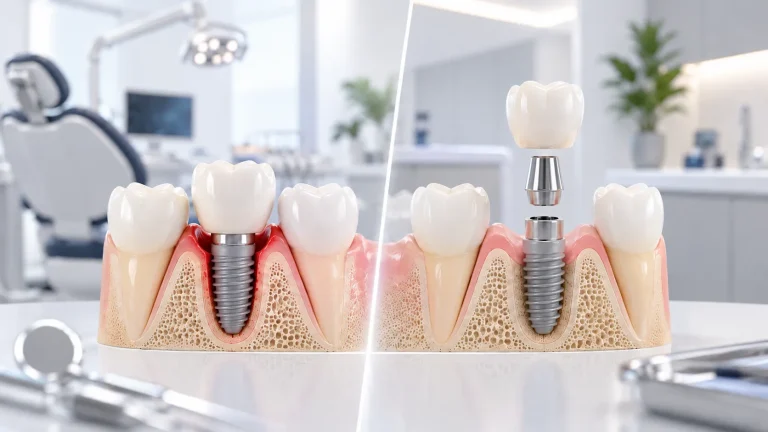
Adults may have large fillings, crowns, bridges, or missing teeth, requiring additional planning before treatment. In many cases, teeth with crowns or fillings can be moved, provided the health of the roots and surrounding tissues has been assessed. Dental implants fused to the bone do not move in the same way as natural teeth. In some cases, the orthodontist may coordinate with other specialists to determine the order of treatment procedures and achieve the best possible outcome.
Does orthodontic treatment take longer after the age of thirty than after the age of teenagers?
Not necessarily, I have discussed A systematic review and meta-analysis published in the journal Progress in Orthodontics in 2020 Duration of treatment with fixed braces in adults and adolescents.
The review included 11 studies with 4,349 patients from both age groups. The meta-analysis found no statistically significant difference in total treatment time between adults and adolescents. However, the researchers noted the limited quality of the available evidence, and that certain specific dental movements may take longer in adults.
What factors influence the duration and results of orthodontic treatment for adults?
The effect of each factor cannot be determined in isolation from the other factors; therefore, the patient needs an individualized treatment plan rather than relying on general estimates of duration.
| worker | Its potential impact on treatment |
|---|---|
| the age | It may affect some biological responses, but it is not the sole determinant of duration. |
| Severe crowding of teeth | Complex cases may require additional movements and a longer duration. |
| Gum health | Active infections may require treatment prior to orthodontics or during follow-up. |
| Jawbone condition | The amount and health of bone affect the planning of required movements. |
| Missing teeth or dentures | You may need to coordinate between more than one specialization. |
| Calendar type | It is chosen according to the nature of the situation and the movements required. |
| Adherence to treatment | Regularly following reviews and device instructions helps avoid delays. |
| daily habits | Smoking, poor oral hygiene, and certain habits can affect tissue health and outcomes. |
What are the best types of braces for adults?
Several options are available for treating teeth alignment problems in adults, and the choice varies depending on the nature of the case, the desired result, and aesthetic and practical considerations.
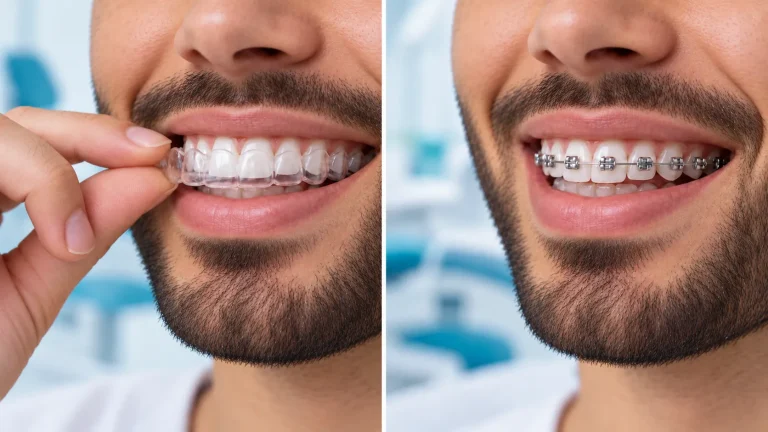
- transparent removable calendar Clear aligners rely on transparent trays designed to gradually move teeth and can be removed while eating and brushing. This type may be suitable for some adults who are concerned about their appearance at work or meetings and want a less noticeable option than traditional metal braces. However, its success depends on adhering to the orthodontist's instructions and it is not the best choice for all bite problems.
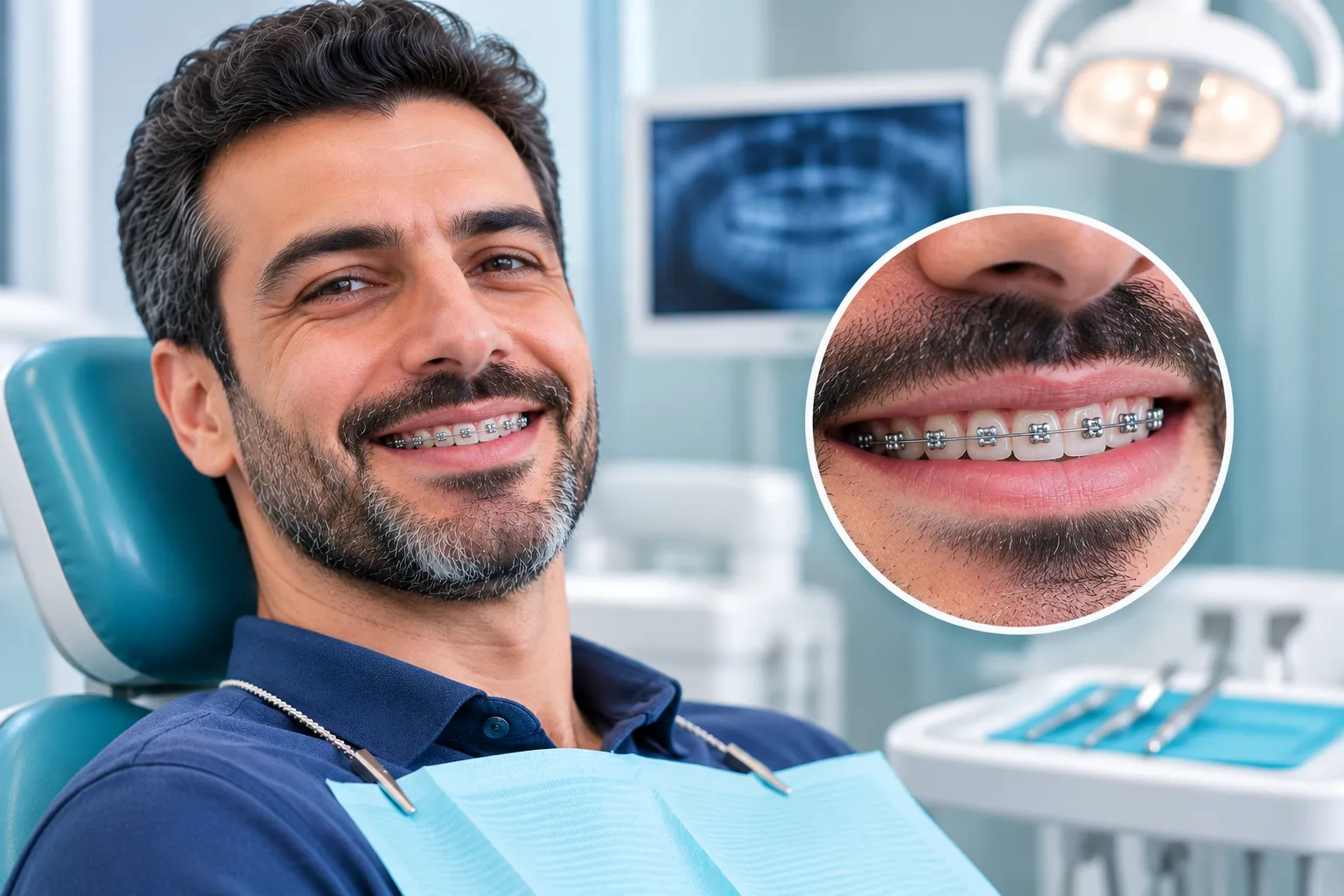
- traditional metal calendar : Metal braces consist of brackets and wires that are bonded to the teeth and help implement planned orthodontic movements. They are used to treat a wide range of dental alignment problems and may be suitable for some cases requiring precise control of tooth movement. One of their advantages is that they are a fixed appliance, eliminating the need to remember to wear them daily, but they do require extra care when brushing and eating certain foods.
Learn about What is the difference between clear and metal braces? And which is more suitable for your case?, This helps you understand the characteristics of each type and the factors that influence the choice of the appropriate treatment.
Are clear braces better for adults than metal braces?
.There is no single type that is best for all adults. Clear braces may be a suitable option for those who care about appearance and the possibility of removing the device, while a doctor may prefer fixed braces for some cases that require more complex movements.
It is essential that the choice of device not be based solely on appearance; the health of the gums and teeth, the complexity of the bite problem, and the ability to adhere to treatment instructions must all be taken into account.
For those over thirty, the presence of fillings, crowns, or missing teeth may make Individual planning is more important than the type of device itself..
Is it possible to get braces after the age of 40 or 50?
Yes, orthodontics can be appropriate at age 40, 50 or later, as long as the health of the teeth and supporting tissues allows it.
There is no medical rule that considers a certain age to be the ultimate limit for the possibility of moving teeth, but assessing the health condition becomes more important when there are chronic diseases, gum problems, or tooth loss.
Is orthodontics safe for adults with gum problems?
Orthodontic treatment can be performed on some patients with a history of periodontal disease, provided the inflammation is controlled and adequate tissue stability is achieved before orthodontic procedures begin. A history of periodontal inflammation does not necessarily preclude the use of orthodontics.
Confirms Clinical guidelines issued by the European Federation of Periodontal Associations (EFP) The importance of coordinating gum treatment and orthodontics in advanced cases, with continuous follow-up and dealing with any new disease activity.
The patient may need to treat the gums first, and then reassess the condition of the teeth and bone before determining whether orthodontics can be started. Therefore, early diagnosis and maintaining gum stability are important steps to reduce risks during treatment.
Does orthodontic treatment for adults require tooth extraction?
Not all patients need teeth extracted before orthodontic treatment. The decision is determined based on the degree of crowding, the position of the teeth within the jawbone, the relationship between the jaws, and the desired treatment outcome.
In some cases, the necessary space may be created without extraction, while others may require the removal of one or more teeth as part of a carefully considered treatment plan. The need for extraction cannot be determined solely based on age, and choosing a non-extraction treatment plan before a thorough evaluation of the problem is not advisable.
How to maintain orthodontic results after age 30?
The orthodontic journey does not end once the brackets are removed or the transparent moldings are finished; an important stage known as fixation follows. Dental retainers aim to reduce the likelihood of teeth shifting back to their previous positions.and to help maintain the results achieved.
Tips for dental care during and after braces:
- Brush your teeth twice a day using toothpaste that contains fluoride.
- Use interdental cleaning tools appropriate for the type of braces.
- Adhering to appointment schedules and monitoring gum health.
- Adherence to wearing transparent or fixed casts as instructed by the doctor.
- Avoid smoking and habits that may affect oral health.
- Consult a doctor if you experience persistent bleeding in your gums or abnormal movement of your teeth.
And she explains Saudi Ministry of Health in Dental Care Guide The importance of brushing teeth twice a day for two minutes, and using appropriate methods to prevent plaque buildup and gingivitis.
For more information on the importance of preventative follow-up, you can read the article The importance of regular dental checkups Posted on the Horizon Clinics website.