Can a missing tooth be replaced on the same day? And are immediate dental implants better than traditional implants? These are some of the most frequently asked questions by those considering replacing their teeth, especially with the availability of modern technologies that help reduce the treatment time in some cases.
In fact, the choice of dental implant method does not depend on speed alone; rather, it is related to the condition of the jawbone and gums, the location of the missing tooth, the stability of the implant, and the patient's general health.
In this article, we explain the difference between immediate and traditional dental implants, the duration of treatment in each method, their advantages, and the cases that each option may be suitable for, to help you understand the treatment before visiting the dentist.
What is immediate dental implant surgery?
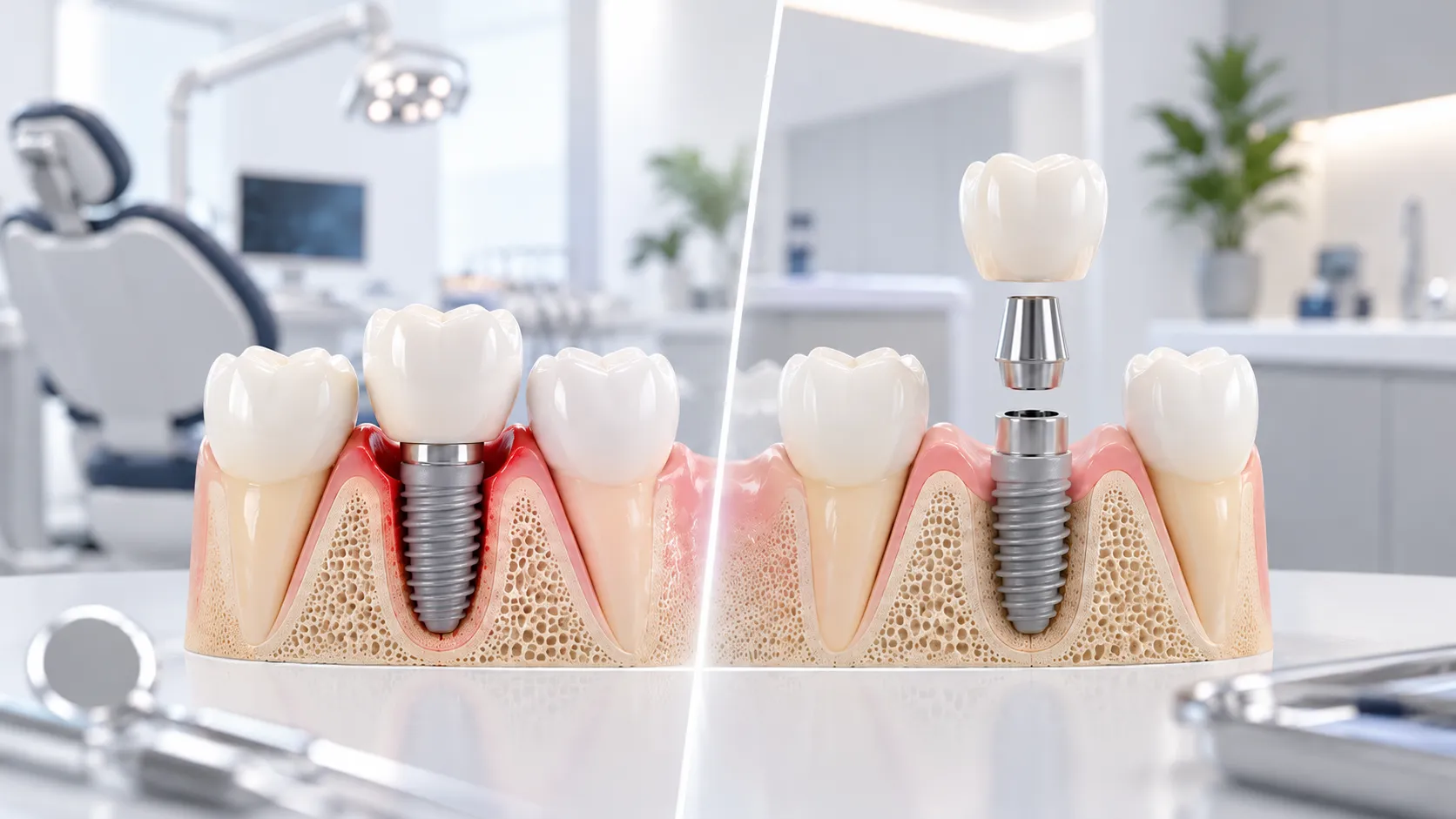
Immediate Dental Implant Placement is a procedure in which the dental implant is placed inside the jawbone immediately after the tooth is extracted, during the same surgical session, instead of waiting for the extraction site to heal before installing the implant.
This method may help shorten one stage of treatment and reduce the number of surgical interventions in suitable cases, but it requires specific conditions related to the bone and tissues surrounding the tooth. You can learn more about... Dental implant service at Horizon Clinics To find out about the treatment options available at the clinic.
Does immediate implant placement mean fitting the final tooth on the same day?
Not necessarily. Here, a distinction must be made between two different concepts:
- Immediate planting: The implant was placed inside the bone on the day the tooth was extracted.
- Immediate loading or immediate compensation: A dental prosthesis is fixed to the implant within a short period of time after it is implanted, and it may be a temporary crown in some cases.
The dentist can perform an immediate implant placement and then wait for osseointegration before fitting the final crown. Sometimes, an early temporary prosthesis can also be fitted, provided the implant is adequately stabilized and the prosthesis is protected from excessive chewing forces. The International Dental Implant Team (ITI) These differences fall within his scientific classification of implant placement and loading times.
What is traditional dental implant surgery?
Traditional dental implants, or delayed implants in common usage, rely on placing the implant after a period of tissue healing following tooth extraction, or in the position of a tooth that has been missing for some time.
During this period, the doctor assesses gum health, bone density, and volume. Some patients may require additional procedures, such as bone grafting, before implant placement. Bone grafting as part of oral and dental surgery procedures Part of the preparation of the position in some patients.
It is important to know that postponing implant placement does not always mean waiting a full six months; there is an early implant that is performed after the soft tissues or part of the bone have healed, and a late implant after the bone has healed to a greater degree.
These options allow the doctor to choose the appropriate timing according to the patient's condition, instead of relying on one method for everyone.
What is the difference between immediate and traditional dental implants?
The main difference lies in the timing of implant placement after tooth extraction, but other variations may influence the treatment plan. These differences do not necessarily mean that one method is always better. The primary goal is to achieve a stable implant and a suitable long-term functional and aesthetic outcome.
| Comparison point | Instant farming | traditional agriculture |
|---|---|---|
| Implant placement appointment | On the same day the tooth was extracted | After a period of healing |
| Number of surgical interventions | It may be less in some cases | Separate stages may be required |
| Jawbone condition | You need a bone that allows for adequate initial stability. | It allows time for the bone to heal or repair itself. |
| Final crown fitting | Not necessarily on the same day | Often after osseointegration |
| Treatment duration | It may shorten the total time | It depends on the healing process and the procedures required. |
| Treatment suitability | Selected cases after careful evaluation | Cases requiring additional preparation |
How long does immediate and traditional dental implant surgery take?
The duration of dental implant surgery varies depending on the timing of implant placement, the condition of the tissues, the need for bone grafting, and the date of final prosthesis fixation.
Duration of immediate dental implant surgery :
In appropriate cases, tooth extraction and implant placement can be performed during the same treatment session. However, this does not mean the treatment is complete; the bone needs time to integrate with the implant surface before it can withstand chewing forces normally.
In some cases, the doctor may place a temporary crown, while postponing the placement of the final crown until the implant is stable and the tissues have healed.
Duration of traditional dental implant surgery :
According to the ITI classification, post-extraction transplant options include:
- Early planting: After about 4 to 8 weeks, following the healing of the soft tissues.
- Implantation after partial bone healing: After about 12 to 16 weeks.
- Late planting: More than 6 months after the extraction, when the bone has healed to a suitable degree.
After implant placement, the osseointegration phase may take about 3 to 6 months in many treatment plans, and may be longer or shorter depending on the case.
He explains Cambridge University Hospital, part of the NHS The stages of implant healing and factors that may prolong treatment time are complex. Therefore, the total duration of immediate or traditional implant surgery cannot be accurately determined before examination, imaging, and the development of a treatment plan.
When is immediate dental implant surgery appropriate?
Immediate implantation may be a suitable option when the condition of the mouth and bone allows for the implant to be placed immediately after extraction without affecting its stability.
- Sufficient bone quantity An adequate amount of jawbone must be available to allow the implant to be fixed in its correct position, while achieving good initial stability.
- Health of the bone surrounding the tooth The integrity of the bone walls surrounding the extraction site helps improve the chances of proper implant placement, especially in front teeth, which require greater attention to the aesthetic result.
- Gum and surrounding tissue health Implant surgery requires assessing the condition of the gums and any existing diseases, and treating infections when necessary. Information on gum inflammation and bleeding, and their treatment options, can be found on the [page name/page number]. Treatment of gum disease at Horizon. Not every previous infection automatically precludes immediate implantation; the decision depends on the type of infection, the ability to clean the area, and the availability of suitable bone. The presence of acute inflammation at the implant site may necessitate a change in the treatment plan.
- Possibility of achieving suitable initial stability The initial stability of the implant is one of the most important factors that determine the possibility of performing immediate implantation, as well as the suitability of installing an early temporary crown.
It has been confirmed ITI recommendations for selecting immediate implantation cases The importance of assessing bone, gums, initial stability, and the patient's overall health before adopting this option.
When is traditional dental implant surgery the best option for your case?
The doctor may advise postponing the procedure when there are factors that make immediate implantation less suitable. These cases include:
- A clear deficiency in the jawbone necessitates restoration or grafting.
- Damage to the bone walls surrounding the tooth as a result of extraction or infection.
- Difficulty in achieving adequate initial implant stability.
- There are gum problems or infections that require treatment first.
- There are health factors that need to be controlled or assessed before surgery.
Waiting here may be a necessary part of the treatment plan, and not a sign that traditional implantation is less advanced. In some cases, the doctor may recommend early implantation rather than immediate implantation or a long wait, with the aim of achieving a better balance between tissue healing and the duration of treatment.
Which is better in terms of dental implant success?
It is natural for a patient to wonder about the success rate of immediate dental implants compared to traditional ones, especially when considering a treatment that is supposed to last for years.
Published in the Dentistry Journal in 2023 A systematic review and meta-analysis compared seedling survival in immediate and delayed planting..
The review included 10 comparative studies, and the results showed that approximately 97.4% of immediate implants versus 97.5% of delayed implants remained during the follow-up periods in the studies included, with no clear statistical difference between the two groups.
However, it is important to understand that these results do not guarantee the success of every implant. Furthermore, implant retention is not the sole criterion for success; the health of the surrounding tissues, function, aesthetic outcome, and absence of complications are also important factors.
She pointed Another scientific review published in Clinical Oral Implants Research The survival rates of the implants were similar between the two methods, with higher complications observed in some immediate implantation groups.
Scientific summary: Both methods can achieve good results, but case selection, careful planning, and follow-up are essential to minimizing risks.
Are immediate dental implants more painful than traditional ones?
The severity of the pain cannot be judged based on the type of implant alone; the sensation after the procedure varies according to the number of teeth, the complexity of the surgery, the need for bone grafting, and the body's response to healing.
Dental implant surgery is usually performed under local anesthesia. The patient may experience some pain or swelling after the anesthetic wears off. The dentist will provide instructions on how to minimize discomfort and care for the surgical area. If severe pain increases, swelling worsens, bleeding persists, or abnormal discharge occurs, the dentist should be contacted for evaluation.
How does the dentist determine the appropriate type of dental implant?
Before deciding between immediate and traditional farming, The dentist needs a comprehensive evaluation It takes into account the patient's circumstances and treatment needs.
The assessment typically includes an examination of the teeth and gums, a review of medical history and medications, an appropriate X-ray examination, and an assessment of the amount of jawbone and the need for preparatory procedures.
Three-dimensional computed tomography (CBCT) may be used when necessary to evaluate the implant position, bone, and adjacent anatomical structures. (See page [page number] for further details.) Digital radiology diagnostics at Horizon Clinics Imaging options used within the medical evaluation.
And it provides Saudi Ministry of Health Official Guidelines for Clinical Practice of Dental Implants (PDF)This is included in the publications of the General Directorate of Dentistry. After the examination, the dentist can discuss treatment options, expected duration, cost, and potential risks before a decision is made.
How do you care for your teeth after implant surgery?
Regardless of the implantation method, daily care and regular follow-up play an important role in maintaining the health of the gums and tissues surrounding the implants.
Key advice includes following the doctor's instructions after surgery, maintaining oral hygiene, avoiding early pressure on the implant, keeping follow-up appointments, and refraining from smoking.
And confirms Saudi Ministry of Health on the Oral and Dental Health Platform The importance of brushing teeth twice a day, using cleaning tools between teeth, and visiting the dentist regularly.
The method of cleaning the transplanted area during the first few days may differ from the usual routine; therefore, you should follow the specific instructions provided by your doctor. For more information on prevention, please refer to the article. The importance of regular dental checkupsOr learn about the services Oral and dental health care In Horizon.
Summary: Immediate or traditional dental implants?
Choosing between immediate and traditional dental implants isn't just about getting the fastest treatment; it's about determining the method that provides optimal conditions for implant stability, tissue healing, and achieving a good functional and aesthetic outcome. Immediate implants may shorten some treatment steps for suitable patients, while early or delayed implants allow additional time for bone and gum preparation when necessary.
If you are considering dental implants in Riyadh, you can learn more about Dental implant service at Horizon Clinics In the Al-Nuzha neighborhood, andBook an appointment for your assessment Discussing treatment options and expected duration with the medical team.